







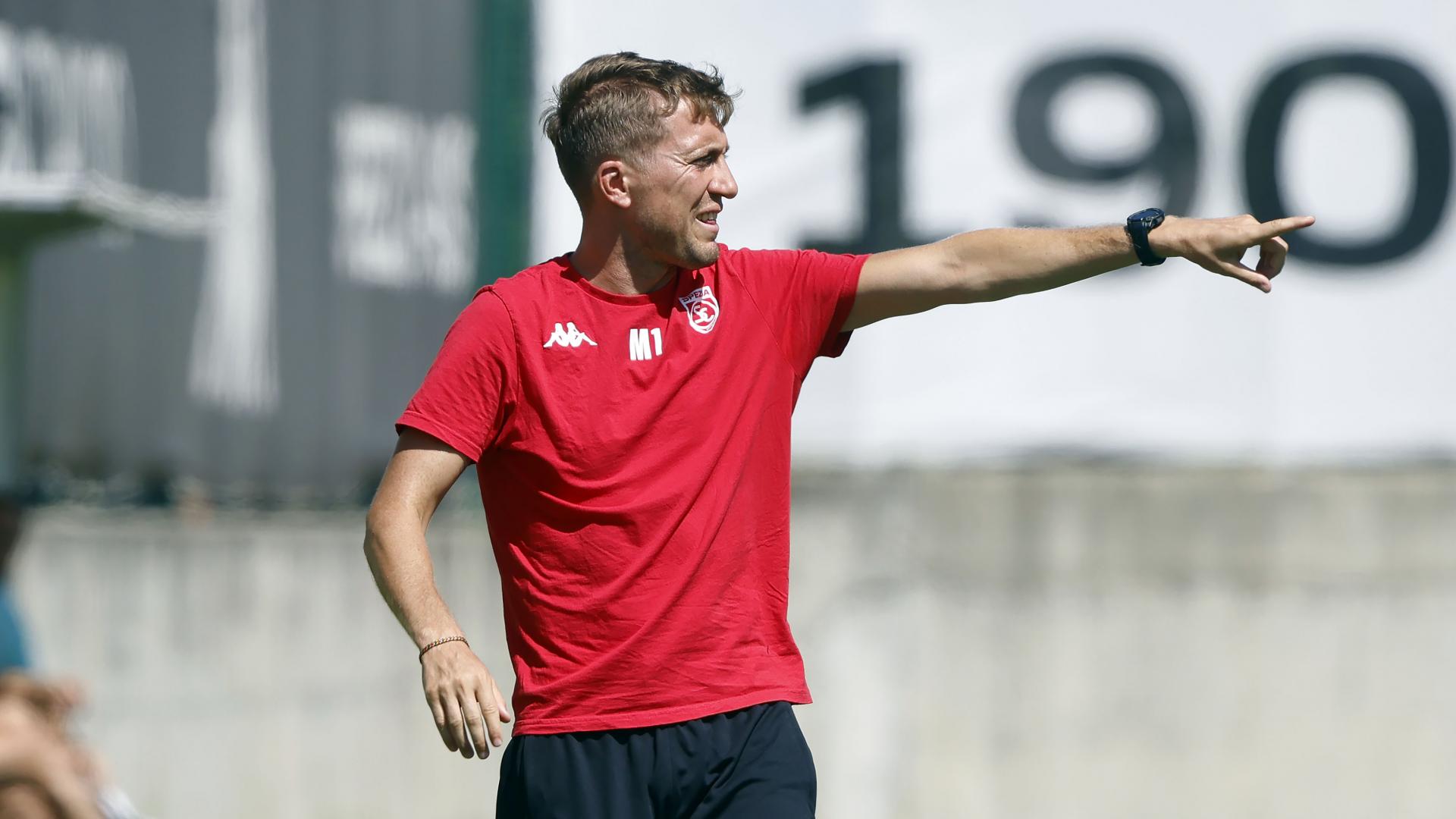
On the eve of the Primavera team’s league debut, here’s what coach Arturo Lupoli had to say: “Things are looking very positive. I’ve found a group of very willing young players, with a mix of those who were already on the Primavera team last year, those coming up from the lower youth ranks, and those who’ve already had some experience with the first team. I’m really enjoying it: we’ve spent intense weeks working on every aspect—from general fitness to technical and tactical aspects—while also trying to get to know the players well on a personal level. Now we’re ready to tackle the league in the best possible way.
I expected to find a healthy group that knows each other well and has been together for several years, and in that regard I haven’t been disappointed: I see them working well together, helping each other, and even off the field they’re guys who spend time together. What I didn’t expect was to find a team already so mature for their age: they read situations well and have a very solid foundation in many areas, and this makes our job—and that of the staff, who demand a lot and strive to help them grow—much easier. Over the past few weeks, they’ve risen to the challenge.
The connection with the first team is an aspect the club has emphasized since the very first meetings: having a unified approach that starts with the youngest age groups, moves through the Primavera, and brings players ready for the first team—with a shared mindset and playing philosophy. The goal is a proactive and dominant style of soccer, capable of pressing high up the field and regaining possession as close as possible to the opponent’s goal, with an entertaining style of play that allows the players to express themselves. This is the direction modern soccer is heading, and it’s what we share with the first team, which remains a role model for us in many of these aspects.
We’ve already seen signs of this in the first few weeks: the best part of our job is seeing the players put into practice everything we work on during the week, from video sessions to individual and positional drills. Soccer is a complex sport, made up of many details, and when you see it all coming together even in friendly matches, you sense a direction and a desire to take the initiative—to build from the back whenever possible, but in the right way: recognizing the advantages, understanding when to be direct and when to be patient. It’s a long process, but the players are showing they want to embrace it.
I also often talk to the players about experiences from my own career—both positive and not-so-positive—that have taught me a great deal: not just on the field, but about the life of a professional, who must have a 360-degree perspective. The advantage we former players have is that we’ve experienced certain situations firsthand—as starters, as bench players, as those who get injured, as those the coach plays less—and I try to share my perspective from back then and my perspective today, as a coach and a more mature man, to help them understand their mistakes and everything that goes into building a career.
A concrete example came just in the past few weeks with Armando Cassano, who made his Cup debut with the first team: we were talking about him today; he stopped by to say hello, and we congratulated him. It’s a source of pride for all of us—for those who coached him in previous seasons, for his family, and for the club—and seeing a product of our youth academy make his first-team debut is an extra incentive for the young players to work harder and believe in the club’s vision, which is proving through its actions that it values those who show they’re ready.
Now it’s time for the league season, and as anticipation grows, so does the emotional aspect: the shift from friendlies to matches that really matter is palpable. We need to manage it by finding the right balance and making sure the players understand that we’re facing an important match—the league opener—on a tough field against a good team with its own strengths. But we have to be ourselves, carry on with the work we’ve done these past weeks with conviction, knowing that the result depends on our performance. We’re going there to play our game to the best of our ability, to keep improving, and to aim for a good result.”
Cookie per Social Networks
Si tratta dei cookie che consentono di condividere anche con altri utenti i contenuti del sito che si sta visitando. Sono i cookie tipicamente utilizzati per attivare le funzioni “Mi piace” o “Segui” dei Social Network quali Facebook e Twitter, solo per citarne alcuni. Queste funzioni consentono ai Social Network di identificare i propri utenti e raccogliere informazioni anche mentre navigano su altri siti.